September 2026 · 4 min read · East Edge Concreting
Exposed aggregate driveways: what they are and why Lake Macquarie keeps choosing them
Drive around Summerland Point, Wangi Wangi or Gwandalan and you'll see it on every second new build. Here's what exposed aggregate actually is, the mixes we pour, and how the finish is made.
What exposed aggregate is
Every concrete mix is stone, sand and cement. On a plain driveway the cement paste sits on top and you see a flat grey surface. On an exposed aggregate driveway we take that thin top layer of paste off, so the stone in the mix becomes the finished surface.
The look comes from two choices: the stone and the oxide. The stone is what you see. The oxide is a pigment added to the cement, so the paste sitting between the stones is coloured rather than plain grey. Change either one and you get a different driveway.
The mixes we pour
These are the combinations we've used on jobs around Lake Macquarie and the Central Coast. Cowra white is a rounded quartz pebble from Cowra in central NSW; basalt is a dark, angular stone; limestone is a softer, paler stone.
- 100% Cowra white with an oxide — the clean, light finish we poured at Wangi Wangi (200 m²)
- 100% ivory with arctic oxide — a warmer, off-white look
- 80% Cowra white / 20% basalt with black oxide — white stone in a dark base, high contrast
- "Ocean floor" — 80% limestone / 20% basalt, a mottled, natural look we've poured at Gwandalan and Niagara Park
- Pewter oxide — a grey base that sits between the light and dark options
How the finish is made
The stone is in the mix from the truck; it isn't scattered on top. We place and screed the concrete the same as any slab, then float it flat and edge it.
Once the surface has firmed, a surface retarder is sprayed on. It slows the set of the top few millimetres of cement paste only. Underneath, the slab hardens as normal.
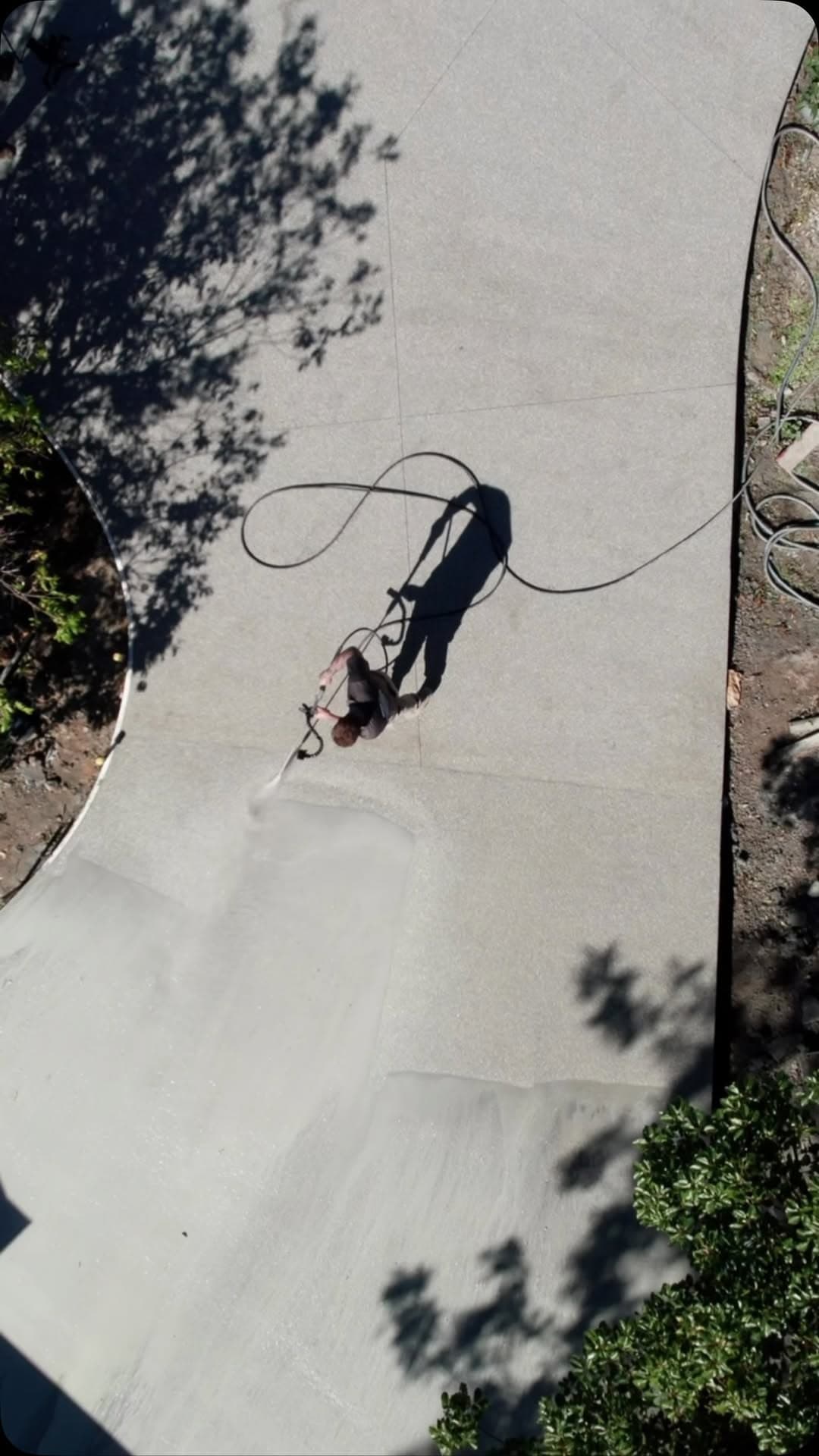
The next day we come back and wash. A pressure washer and a broom take that soft top layer of paste off and leave the stone standing proud. How hard we wash sets how much stone shows — too light and it looks like dirty concrete, too hard and stones start to pull out. This step is the whole trade.
After the slab has cured and dried out, as a rule of thumb about a week later, it's sealed. The sealer locks the stone in, deepens the colour and keeps oil and dirt out of the surface.
Why it suits this area
Grip. The stone surface is textured, so it holds a tyre or a bare foot in the wet. That matters on a sloping block near the lake.
It hides what plain concrete shows. Tyre marks, leaf stains and the odd drip disappear into the pattern. A plain grey driveway shows every one.
It matches the houses. Black-clad builds, white render, timber — a white or ocean-floor exposed driveway sits under any of them without fighting the facade.
What to decide before we quote
Bring us a photo of a driveway you like, or pick a mix from the list above. We can point you to a job nearby with that mix so you see it in real light rather than on a phone screen. Then we measure the site and talk about falls, drainage and where the slab meets the garage and the road.
Common questions
- Is exposed aggregate slippery when wet?
- No — it's one of the grippier finishes. The exposed stone gives texture underfoot and under tyre. It's a common choice for sloping driveways and pool surrounds for that reason.
- Can I choose the colour of an exposed aggregate driveway?
- Yes, in two ways: the stone (Cowra white, ivory, basalt, limestone, or a blend) and the oxide that colours the cement between the stones (black, pewter, arctic and others). Together they set the finished look.
- How long after pouring can I drive on exposed aggregate?
- As a rule of thumb, keep cars off for about a week and expect the concrete to reach its design strength at 28 days. We'll give you the exact date for your slab, and we seal it before it goes into full use.