August 2026 · 3 min read · East Edge Concreting
Sealing and maintaining exposed aggregate: resealing, washing, marks and what not to do
An exposed aggregate driveway is low maintenance, not no maintenance. A bit of care every few years keeps the colour deep and the stone locked in. Here's what to do, when, and what to leave alone.
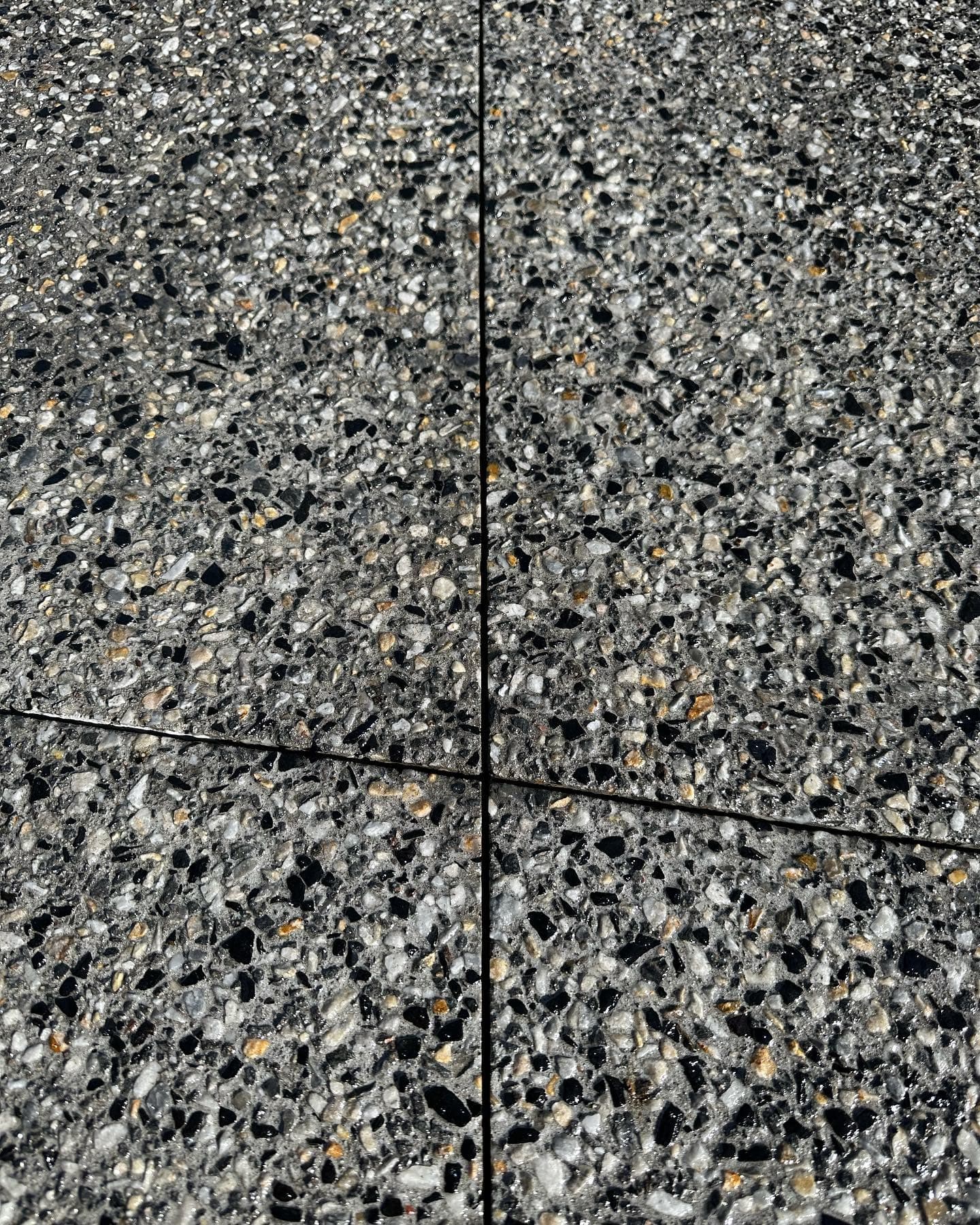
Why it's sealed, and when to reseal
After the paste is washed off, the surface is open stone and bare cement. Left like that it will still last, but it drinks oil, holds dirt in the texture and the oxide colour fades in the sun. Sealer closes the surface, deepens the colour of the stone the way water does when it's wet, and gives you a layer that stains sit on rather than soak into.
Most exposed aggregate is sealed with an acrylic sealer, solvent- or water-based. Solvent-based gives a deeper, wetter look; water-based is lower odour and easier to recoat. Either way it goes on thin, in two coats, onto a clean, fully dry slab.
As a rule of thumb a driveway wants resealing every two to three years; a covered alfresco or path can go longer. The slab tells you when: the colour goes flat, water stops beading and the surface looks dry rather than rich. Resealing is a clean, a dry day and a recoat — a job you can do with a roller, or one we can come back and do.
Pressure washing
A pressure washer is the right tool for the once-a-year clean and before any reseal. Keep it sensible: a fan nozzle, the wand a hand's width or more off the surface, and keep it moving. Held close on a narrow jet it will cut the sealer, pull stones out and leave stripes you can't undo. If it's lifting grit out of the surface, back off.
Tyre marks, oil and rust
Black tyre marks are the most common complaint and they're mostly not rubber; they're plasticiser from hot tyres softening into the sealer where the car sits. They come off with a degreaser and a stiff brush. They're far worse on a freshly sealed slab, so keep the car off for a couple of days after resealing and don't park on it hot.
Fresh oil: soak it up with kitty litter or sawdust before you wipe, then degreaser and a scrub. Old oil that's gone through the sealer needs a poultice and some patience. Rust from a barbecue foot or a planter lifts with an oxalic-acid rust remover — spot test first, then reseal the spot.
Efflorescence
The white, chalky bloom that shows up on newer concrete is efflorescence — salts carried to the surface by moisture as the slab dries out. It's cosmetic, and on a new slab it's normal for the first months. A dry, stiff brush shifts most of it; a dilute efflorescence cleaner does the rest. It's one reason we don't seal a slab until it has properly dried through: seal it early and you trap the salts under the coating as a permanent haze.
What not to do
Most damage we get asked to fix came from one of these:
The short version: hose it when it's dirty, pressure wash it gently once a year, reseal it before it looks tired, and treat spills when they happen.
- Don't use hydrochloric acid to clean a sealed surface — it eats the sealer and etches the cement between the stones
- Don't pressure wash on a pencil jet, close up, or before the slab is at least a month old
- Don't apply sealer thick or in the heat of the day — it goes milky white and has to be stripped
- Don't reseal over dirt, moss or a damp slab; the new coat will peel
- Don't park a hot car or drop a skip bin on a slab that was sealed in the last week
- Don't drag a steel scraper across the stone; it leaves scars the sealer can't hide
Common questions
- How often should exposed aggregate be resealed?
- As a rule of thumb every two to three years on a driveway, longer on covered areas. Reseal when the colour flattens and water stops beading — before the stone starts to look loose.
- Can I pressure wash exposed aggregate?
- Yes, with a fan nozzle held well off the surface and kept moving. A narrow jet up close strips sealer and pulls stones out. Wait until the slab is at least a month old.
- Why are there white marks on my new exposed aggregate?
- That's efflorescence — salts brought to the surface as the slab dries. It's cosmetic and normal on new concrete. Brush it off dry, use a dilute efflorescence cleaner if needed, and make sure the slab is dry through before it's sealed.