Lake Macquarie, the Central Coast & Newcastle
Concrete driveways & paths
Exposed, coloured or plain broomed — cut to the boundary, falling the right way, with the drains and edges done properly so it still reads clean in ten years.
What we pour
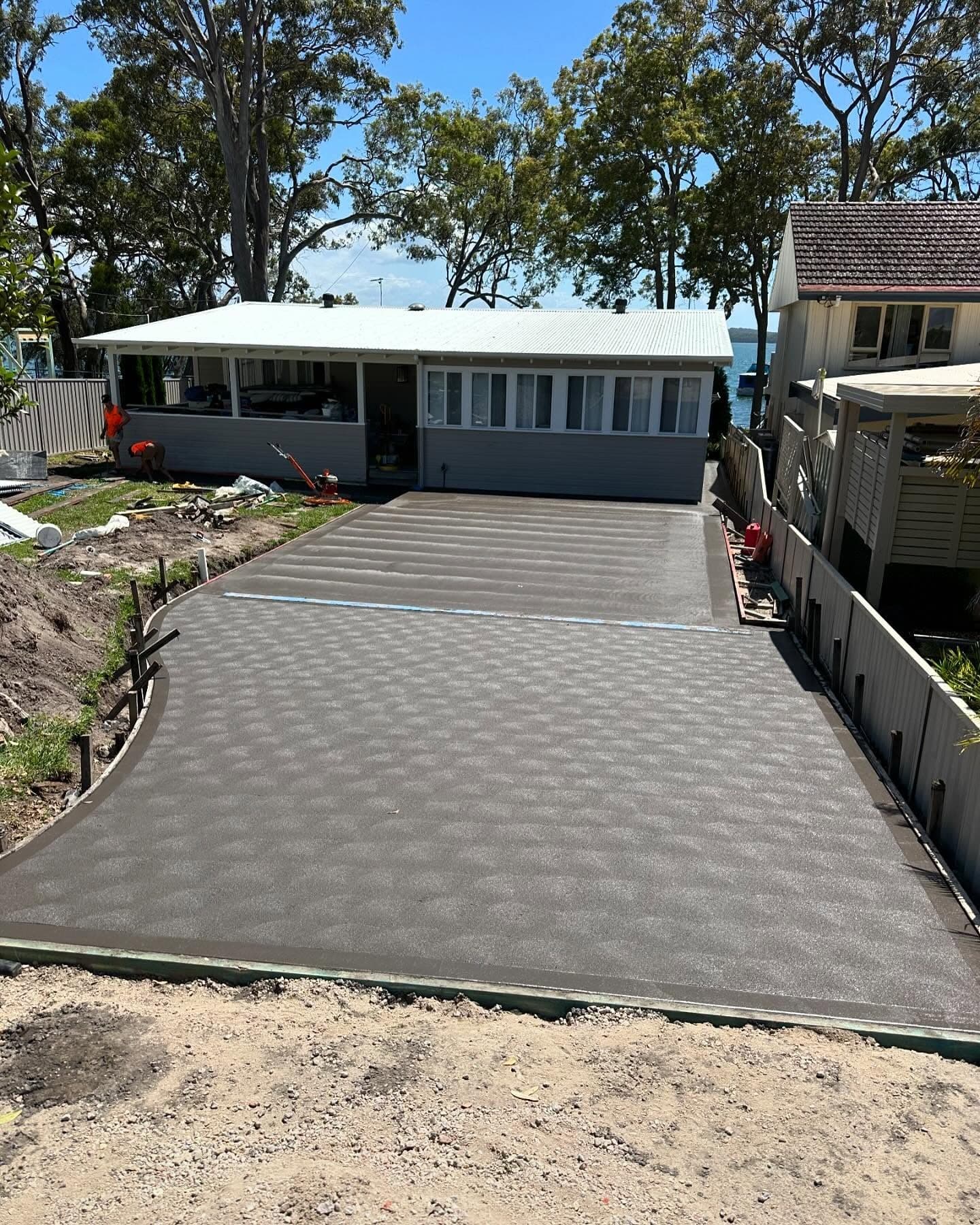
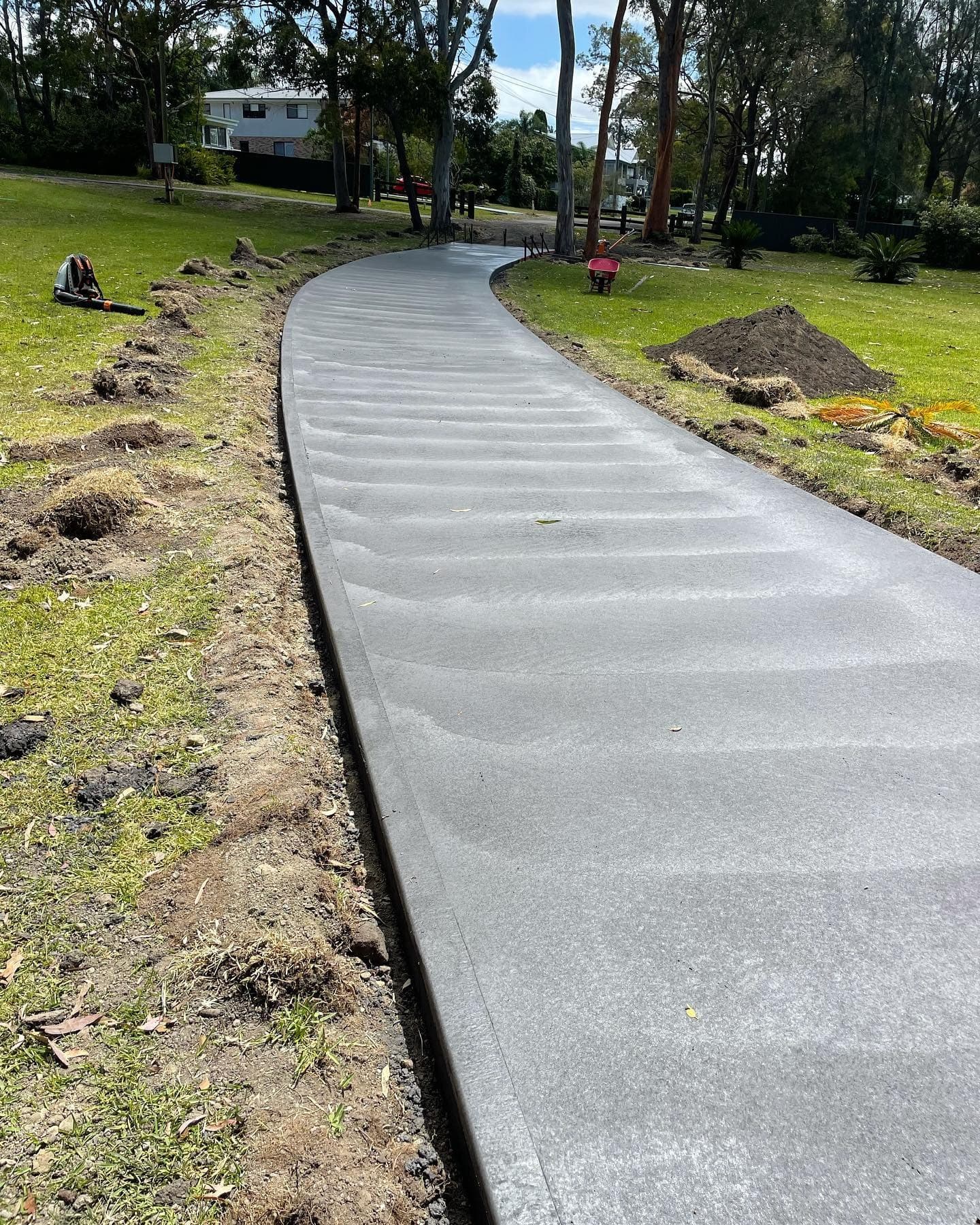
Full-width driveways, turning areas, aprons and paths, from a suburban block up to a 1,300 m² acreage driveway poured in sections. Most of what we do is decorative — exposed aggregate first, then coloured, then plain broomed — but the structure underneath is the same job either way.
- Full-width drives, turning areas and aprons
- Paths, side access and entries
- Grated and strip drains cast in, not added after
- Acreage driveways poured in sections
The part you can't see later
A driveway fails at the edges and the falls, not in the middle. Before anything is poured we work out where the water has to go, how the slab meets your garage and the kerb, and where the joints land so cracking is controlled rather than random.
Drainage gets cast in as part of the pour. A grate that has been cut in afterwards never sits as flat and never looks as clean.
Australian residential driveways are generally laid at around 100 mm with reinforcement, thicker where vehicles are heavier or the ground is reactive — the engineer's drawing governs it on a new build, and we price from that drawing.
Choosing a finish
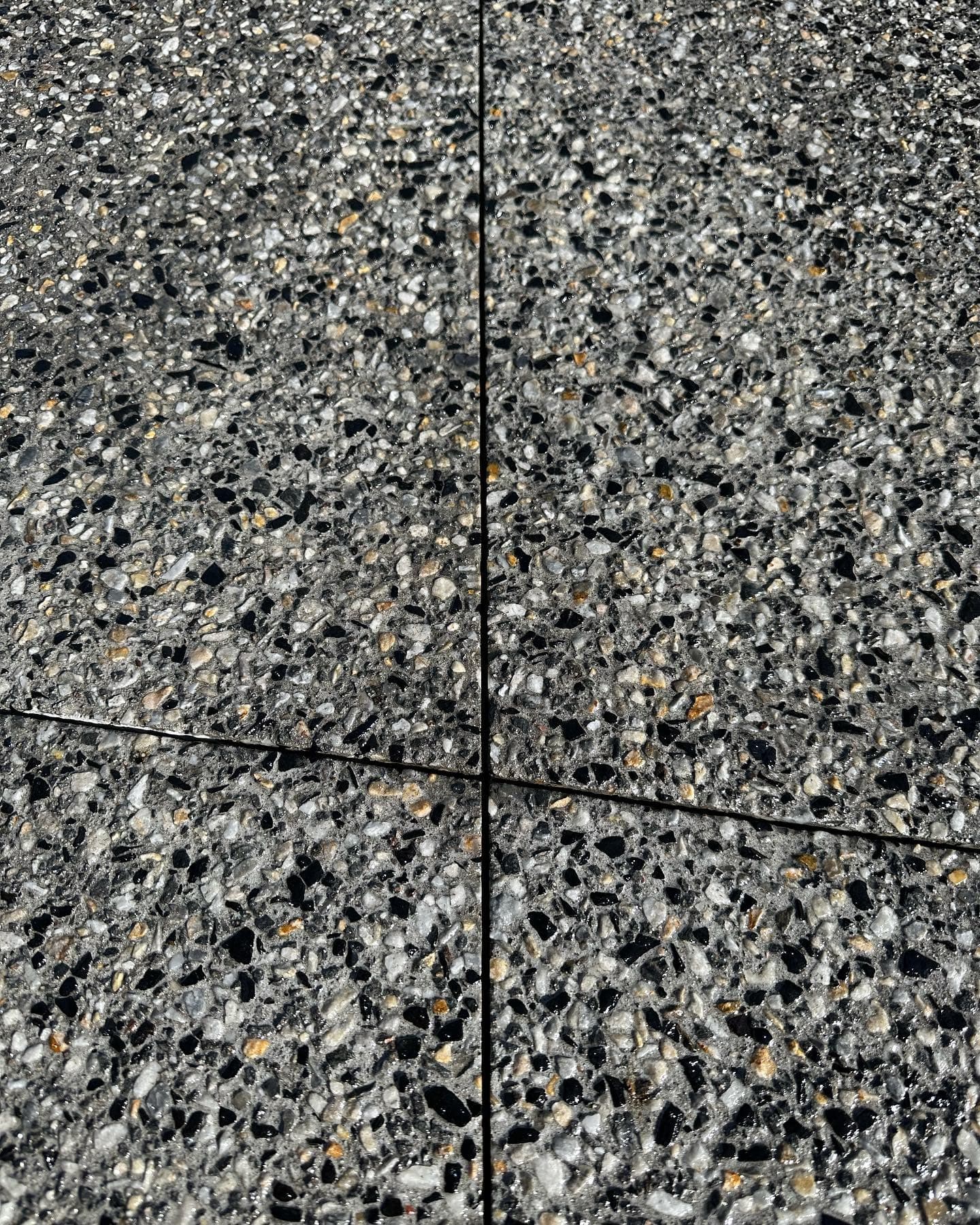
Exposed aggregate is the most popular around here and hides marks best. Coloured concrete gives you a solid tone with an oxide through the mix. Plain broomed is the most economical and still looks sharp when the edges and joints are right.
There is a full comparison in the journal if you are deciding between them, including where each one suits and what maintenance each needs.
Replacing an old driveway
We break out and remove the old slab, reprepare the base and pour new. The Summerland Point driveway on this site was a before-and-after like that. Whether an existing slab can be resurfaced instead depends on what is underneath it — if the base has moved or the slab is cracked through, resurfacing only hides it for a while, and we will tell you that on site.
Jobs like this
Summerland Point · 2024
Summerland Point driveway
Coloured concrete driveway — before & after
Niagara Park · Gwandalan · Lake Macquarie · 2023–24
Exposed-aggregate driveways
Ocean floor, Cowra white & basalt mixes
Cessnock · Wyee · Hunter acreage · 2022–23
Slabs, sheds & acreage
Shed slabs, house slabs and a 1,300m² driveway
Common questions
- How thick should a concrete driveway be?
- As a general rule Australian residential driveways are poured at around 100 mm with reinforcement, going thicker where heavier vehicles run on it or the ground is reactive. On a new build the engineer's drawing sets it and we price from that drawing.
- How long does a driveway take?
- The pour itself is a day for most driveways. Before that there's prep — breaking out anything existing, setting levels, formwork and steel. Exposed aggregate needs us back the next day to wash it off, and sealing follows once it's cured. We'll give you the sequence for your job when we quote.
- Can you match a driveway I've seen?
- Usually, yes — send us the photo. Most of the driveways around Lake Macquarie and the Central Coast are a stone and oxide combination we'll recognise, and we bring samples so you can check it against your own house.
- Do you handle the drainage?
- Yes. Grated and strip drains are cast in as part of the pour, and the falls are set so water runs away from the house and the garage rather than into them.